Deadlock keeps moving fast. Between the City Never Sleeps visual overhaul and the Old Gods, New Blood systems update, Valve has rewritten the map, the neutrals, the item shop, and the way new heroes actually arrive. This guide walks through everything that matters right now — the voting system, the new Street Brawl mode, the reworked Haunts, the Broker’s Corrupted items, and the map objectives worth fighting for — so you can stop guessing and start playing the current version of the game.
The Cursed Apple Is Never Finished

The version of New York City you play in Deadlock — the Cursed Apple — is explicitly designed to change. The two headline updates each resculpted it:
- City Never Sleeps delivered a massive visual update to the map and the neutrals, six new heroes, the wandering merchant known as The Broker, HUD and shop updates, an expanded sandbox, and new accessibility options.
- Old Gods, New Blood overhauled the Patrons and bases, added six more heroes, introduced the fast-paced Street Brawl mode, updated the HUD, reworked settings, and shipped a revamped postgame with an MVP screen.
If your muscle memory is from an older build, treat the map and the neutral camps as brand-new content — the landmarks moved, the creatures changed behaviour, and the objectives shifted.
How New Heroes Arrive: The Voting System
New Deadlock heroes are released two per week, and the community decides the order. Votes are earned simply by playing — the First Win of the Day grants bonus votes — and they’re cast in two places:
- The Pregame lobby, where the winning team’s votes count double.
- The Hideout ballot box.
Alongside voting, New Hero Priority Tokens let players more reliably lock in one of the freshly released heroes instead of leaving it to chance. The rollout cadence has followed a consistent pattern:
- Old Gods, New Blood: two heroes per week on Mondays and Thursdays at 2:00 PM PST, starting January 26th.
- City Never Sleeps: two heroes per week on Tuesdays and Fridays at 2:00 PM PT, with the first release on October 2nd.
If you want to try new heroes on day one, bank votes early and keep a Priority Token ready.
Street Brawl: A New Fast-Paced Game Mode
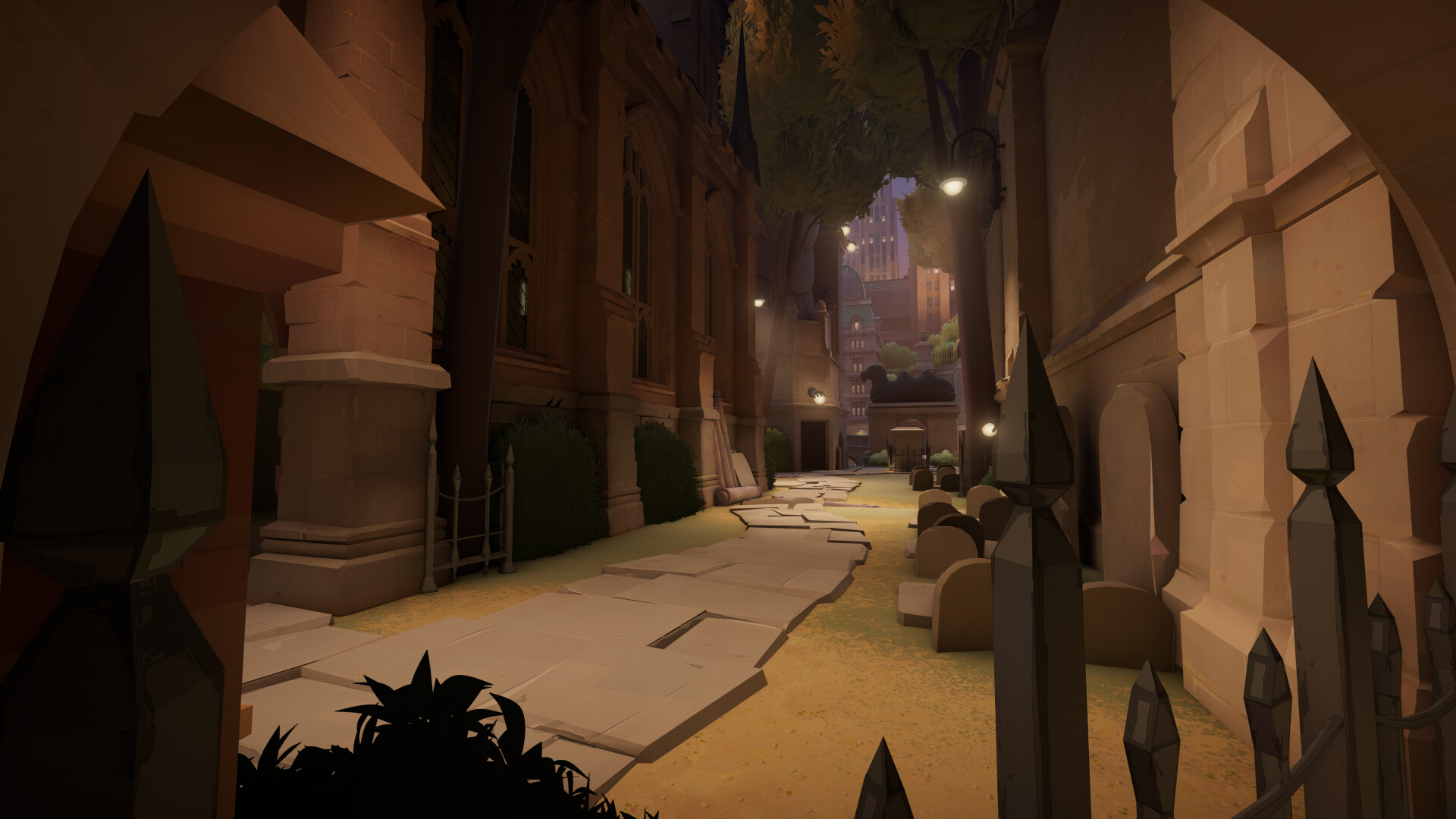
Street Brawl is the biggest shake-up to how you can play Deadlock. It’s a quick 4v4 battle for the city played as a best-of-five match, and each round wraps up in just a couple of minutes. Crucially, every round starts with equal resources for all players — no farming required. That structure strips out the laning and economy minigame and pushes straight to streamlined, aggressive fights. If you want Deadlock’s hero combat and item building without a full-length match, this is where to go.
Map Objectives and Landmarks Worth Contesting
The Cursed Apple is split into distinct districts and lanes, each with landmarks that hide souls and rewards. A few stand out.
High-Value Objectives
- Sunken Plaza: Beneath the Plaza district’s main square lies the Sunken Plaza. As you descend, the sounds of the outside world fade away — high risk, high reward.
- Bell Tower: Climb to the top of the Chinatown Bell Tower for a highly concentrated soul hotspot. Be warned: while you’re collecting, the bell rings loudly across the entire map, announcing exactly where you are.
Districts and Landmark Highlights
The city is organized into four districts, each blending occult flavor with fight-worthy spots:
- Uptown is your first stop and the quickest route to where the action is.
- Times Square is the beating heart of the city — worth seeing at least once, hopefully not just this once.
- Downtown is the busiest stop in town, where citizens report strange rumblings deep beneath the subway line.
- Chinatown is home to the Crabbage Pots and Festival Spirit haunts and the Bell Tower objective.
Beyond those, keep an eye on landmarks like Umbria University (home to the nation’s finest Bibliomancy program), Central Park (the ancient Hangman’s Elm), The Brownstones, the Stock Exchange (where the warlocks of Wall Street make their trades), the Seaport Dock at Pier 16, the Old Fairfax Factories of the Occult Industrial Complex, and the Theater, home of the Stage Hands haunt.
Pickups and Utility Scattered Around the Map
Not every soul comes from a fight. A handful of map features reward players who explore:
- Tough Crates need a Heavy Melee to break open, but carry extra souls.
- Buff Containers — the revamped golden statues — now also grant Spirit Resist, Bullet Resist, Ability Range, and Move Speed as permanent bonuses.
- Healing Snacks are hidden around the map for keen-eyed players to heal up in a pinch.
- Steam Vents provide invisibility and a small amount of regen while standing on them, letting you and your team duck in and out of veiled cover.
Haunts: The Neutrals You Thought You Knew
The neutrals in Deadlock have been replaced by a variety of creatures called Haunts, each with new behaviours. The HUD now shows each Haunt’s soul value and comparative difficulty, so you can gauge a camp at a glance. Notable Haunts and where they live:
- Specimens — disembodied hands crawling where they shouldn’t.
- Gutter Ghouls — dark thoughts humanity would rather have buried, given form.
- Barrel Mimics — gunpowder-adjacent spirits up to no good.
- Past Dues — book-bound creatures ready to put you to sleep.
- Stage Hands — graceful forms in the Theater district.
- Crabbage Pots and Festival Spirit — Chinatown residents with a taste for ritual.
- Shrooms — fungi twisted by demonic energy in the Haunted Lot.
- Underhands — grasping hands lurking low near the Plaza.
Learn each camp’s difficulty rating early, and you’ll avoid feeding souls to the enemy team when you overcommit to the wrong haunt.
The Broker and Corrupted Items

The Broker is a mysterious wandering merchant who trades in demon-touched (Corrupted) items and modifications. He’s unpredictable by design: he appears in different spots, stays only a few days, and is only around for a limited time. When you find him, you can exchange high-tier items for Corrupted versions — for example, Corrupted Ricochet or Corrupted Recharge.
The catch is the trade-off. Each match, all corrupted items receive random negative attributes from a predefined set, so a Corrupted item is never a clean upgrade. It’s a calculated gamble: extra power now, an unpredictable downside for the rest of the game. Hunt him down when the upside fits your build, and skip him when it doesn’t.
New and Featured Items to Know
Alongside the Corrupted stock, the updates added and refined items across every tier. A quick reference:
Notable Update Additions
- Ballistic Enchantment: imbues an ability with increased range, and dealing damage with it grants increased weapon damage per target hit.
- Recharging Rush: dealing significant Weapon Damage replenishes a charge for each of your charged abilities.
Tier I Starter Options
- Close Range: melee resistance plus bonus weapon damage when your shot target is close.
- Life-Giving Shot: the next shot heals for 50 against heroes and 20 against souls and non-heroes.
- High-Velocity Rounds: +60% bullet velocity and +8% weapon damage.
- Rapid Shooting: +9% fire rate.
- Extended Magazine: +30% max ammo and +8% weapon damage.
- Headshot Booster: bonus health and extra weapon damage on your next headshot against an enemy hero.
- Monster Rounds: more damage to non-heroes, bullet resistance against them, and out-of-combat regeneration.
Tier II Options
- Active Reload: rewards a timed reload press with bonus fire rate, bullet lifesteal, and move speed.
- Quick Shooter: +20% fire rate.
Legendary Items (Old Gods, New Blood)
The Old Gods, New Blood update introduced a set of legendary items. Some are live and grantable in the sandbox with the giveitem command, while others are not in the game yet.
| Legendary Item | giveitem Command | In Game? |
|---|---|---|
| Runed Gauntlets | upgrade_runed_gauntlets | Yes |
| Infinite Rounds | upgrade_infinite_rounds | Yes |
| Eldritch Shot (aka Haunting Shot) | upgrade_eldritch_shot | Yes |
| Shadow Strike | upgrade_shadow_strike | Yes |
| Unstable Concoction | upgrade_unstable_concoction | Yes |
| Eternal Gift | upgrade_eternal_gift | Yes |
| Shrink Ray | upgrade_shrink_ray | Yes |
| Mystical Piano | upgrade_mystical_piano | Yes |
| Omnicharge Pendant (optional 0–3 argument) | upgrade_omnicharge_pendant | Yes |
| Prism Blast | upgrade_prism_blast | Yes |
| Nullification Aura | upgrade_nullification_aura | Yes |
| Cloak of Opportunity | upgrade_cloak_of_opportunity | Yes |
| Electric Slippers (spelled “Eletric Slippers” in the guide) | upgrade_electric_slippers | Yes |
| Celestial Guidance (aka Celestial Blessing) | upgrade_celestial_guidance | Yes |
| Icarus Wings | upgrade_icarus_wings | Yes |
| Patron’s Blessing (aka Mystic Conduit) | upgrade_patrons_blessing | Yes |
| Frostbite (aka Frostbite Charm; optional 0–3 argument) | upgrade_shivas_bracelet | Yes |
| Apex Combat | — | Not in game |
| Ancient Shielding | — | Not in game |
| Shadow Step | — | Not in game |
| Timeless Emblem | — | Not in game |
| Haunting Scream | — | Not in game |
| Aerial Mastery | — | Not in game |
Classic Counter and Utility Items
Deadlock’s core item library remains the backbone of any build. Knowing what to buy against what wins fights:
- Anti-heal: Decay, Healbane, Toxic Bullets.
- Defensive/counter tools: Reactive Barrier, Ethereal Shift, Debuff Remover, Unstoppable, Metal Skin, Debuff Reducer, Return Fire.
- Disabling tools: Knockdown, Curse, Silence Glyph.
- Support and save tools: Rescue Beam, Healing Rite (a common laning purchase).
- Mobility: Warp Stone, Extra Stamina, Majestic Leap, Sprint Boots, Veil Walker.
- Armor: Bullet Armor, Spirit Armor.
- Damage and debuff tools: Slowing Bullets (builds into Silencer), Slowing Hex, Withering Whip, Suppressor.
- Big-ticket upgrades: Inhibitor and Pristine Emblem are examples of expensive, high-tier purchases.
Hero Counter-Item Cheat Sheet
One of the fastest ways to improve is to buy against the enemy team’s threats. This table pairs each hero with the items that answer them.
| Hero | Answer Them With |
|---|---|
| Abrams | Anti-heal, barrier, and slow items (counters his stuns and healing) |
| Bebop | Barrier, debuff-removal, and rescue items (vs. hook, uppercut, bombs) |
| Dynamo | Barrier, control, and rescue items (vs. abilities and ultimate) |
| Grey Talon | Debuff reduction, Knockdown, and shift items (vs. traps and airborne play) |
| Haze | Return Fire, Knockdown, and defensive items (vs. primary fire and ultimate) |
| Infernus | Debuff reduction, anti-heal, and slowing items (vs. passive and healing) |
| Ivy | Mobility, anti-heal, and silence items (vs. abilities and healing) |
| Kelvin | Mobility, anti-heal, and silence items (vs. slowing and healing) |
| Lady Geist | Armor, anti-heal, and silence/Curse items |
| Lash | Silence, slow, and Knockdown items (vs. movement abilities) |
| McGinnis | Monster Rounds, mobility, and damage-reduction items (vs. turrets and slowness) |
| Mirage | Reactive Barrier (vs. tornado) |
Also watch for Seven as a high-damage carry threat when fed, and note the broader roster of heroes players gravitate to — Abrams, Haze, Seven, Infernus, McGinnis, and Dynamo are frequently recommended as beginner-friendly picks.
Revamped Postgame and the New MVP System
Old Gods, New Blood reworked how matches end. There’s a new MVP scoring system and a redesigned postgame summary, including a postgame graph that tracks all permanent buffs collected during the game. Use the graph to see at a glance how your stat gains stacked up over the match — a genuinely useful tool for reviewing why a build snowballed or stalled.
Accessibility and Settings
Deadlock added dedicated accessibility settings across visuals, audio, and controls. Options include:
- Enemy UI color adjustments.
- VO subtitles with customization.
- Auto move, auto fire, and auto mantle.
- Reduced camera shake and reticle updates.
If any of these help you play more comfortably, they’re worth enabling early — they change feel, not power.
Practice in the Sandbox
Deadlock’s expanded sandbox makes testing everything above painless. You can load an empty practice map with useful cheats enabled using the dl_streets map command, then use giveitem commands (see the legendary table above) to spawn items and experiment with builds before you take them into a real match. It’s the fastest way to learn Haunt difficulty, objective routes, and Corrupted-item trade-offs risk-free.
Frequently Asked Questions
How often do new Deadlock heroes release? Two heroes release per week, and the community votes on the release order. Votes are cast in the Pregame lobby (winning team’s votes count double) and at the Hideout ballot box, with bonus votes from the First Win of the Day.
What is Street Brawl in Deadlock? A fast-paced 4v4 mode played as a best-of-five. Each round lasts a couple of minutes and every player starts with equal resources — no farming.
What does The Broker sell? Corrupted (demon-touched) items and modifications. He appears in different spots for a limited time and exchanges high-tier items for Corrupted versions like Corrupted Ricochet or Corrupted Recharge, each carrying random negative attributes for the match.
How do I practice items and builds without risk?
Load the dl_streets practice map through the sandbox and use the giveitem commands to spawn legendary items and test them freely.