Note on data sources: This guide is built from community-reported guide content and early-playtest observations of Deadlock. Some numbers and behaviours may change between patches, so treat everything below as a starting point to test in your own matches rather than a fixed, officially confirmed rule set.
Souls are the engine of every Deadlock match. They are your currency, your experience, and your map pressure all rolled into one resource — and the team that farms them more efficiently usually wins the long game. This Deadlock farming guide breaks down how the souls economy works, how to win your lane without falling behind, and how the map’s newest high-value spawns change the way you farm.

What Souls Actually Do
Deadlock is a 6v6 MOBA built on top of a third-person shooter, and souls are the single resource that binds the two halves together. Souls serve as both your buying power in the shop and your hero progression, so every soul orb you collect feeds directly into the items that make you stronger.
Because of that dual role, farming in Deadlock is never “optional downtime.” A few hundred souls can be the difference between finishing a key item before the next fight or showing up with nothing. If you want a Deadlock farming souls mindset from minute one, start thinking of every orb as both gold and XP — and start counting the ones you leave on the ground.
Last-Hitting and Soul Orbs
The core skill behind all farming in Deadlock is the soul orb. When a unit dies, its souls are released as an orb that you (or a teammate) can collect, and the community framing of this system is the classic MOBA loop:
- Last-hitting — landing the killing blow on a creep so the souls spawn for your side.
- Soul orbs — the physical pickup released on death that must be claimed before it expires.
- Denies — denying an enemy the orb so they lose out on that income.
Getting consistent at last-hitting is the highest-value habit a new player can build, because it compounds over twenty-plus minutes. Even a small improvement in your orb-collection rate snowballs into a meaningful item timing advantage.
How to Win Your Lane
Laning is where the souls race is decided in the early game. Community guides describe Deadlock’s map as having three to four lanes connected by ziplines, with each lane guarded by a Guardian — the giant, torch-bearing objective that punishes overextension.
A few lane principles that carry across nearly every guide:
- Trade around the orb, not just the kill. Chipping the enemy hero matters, but the real gap comes from denying their income while protecting yours.
- Respect the Guardian. Pushing past it without a plan usually hands the lane back to your opponent.
- Use the zipline for tempo. Ziplines are your fast route back to lane and to where the action is, so you rarely need to sit idle.
- Buy for the lane. During laning, guides frequently point to sustain and utility purchases such as Healing Rite to stay in lane and keep farming instead of walking back to base.
Beginner-friendly heroes like Abrams, Haze, Seven, Infernus, McGinnis, and Dynamo are often recommended precisely because they make the laning and farming phase more forgiving while you learn the rhythm.
Farming the Map: Hotspots and Objectives
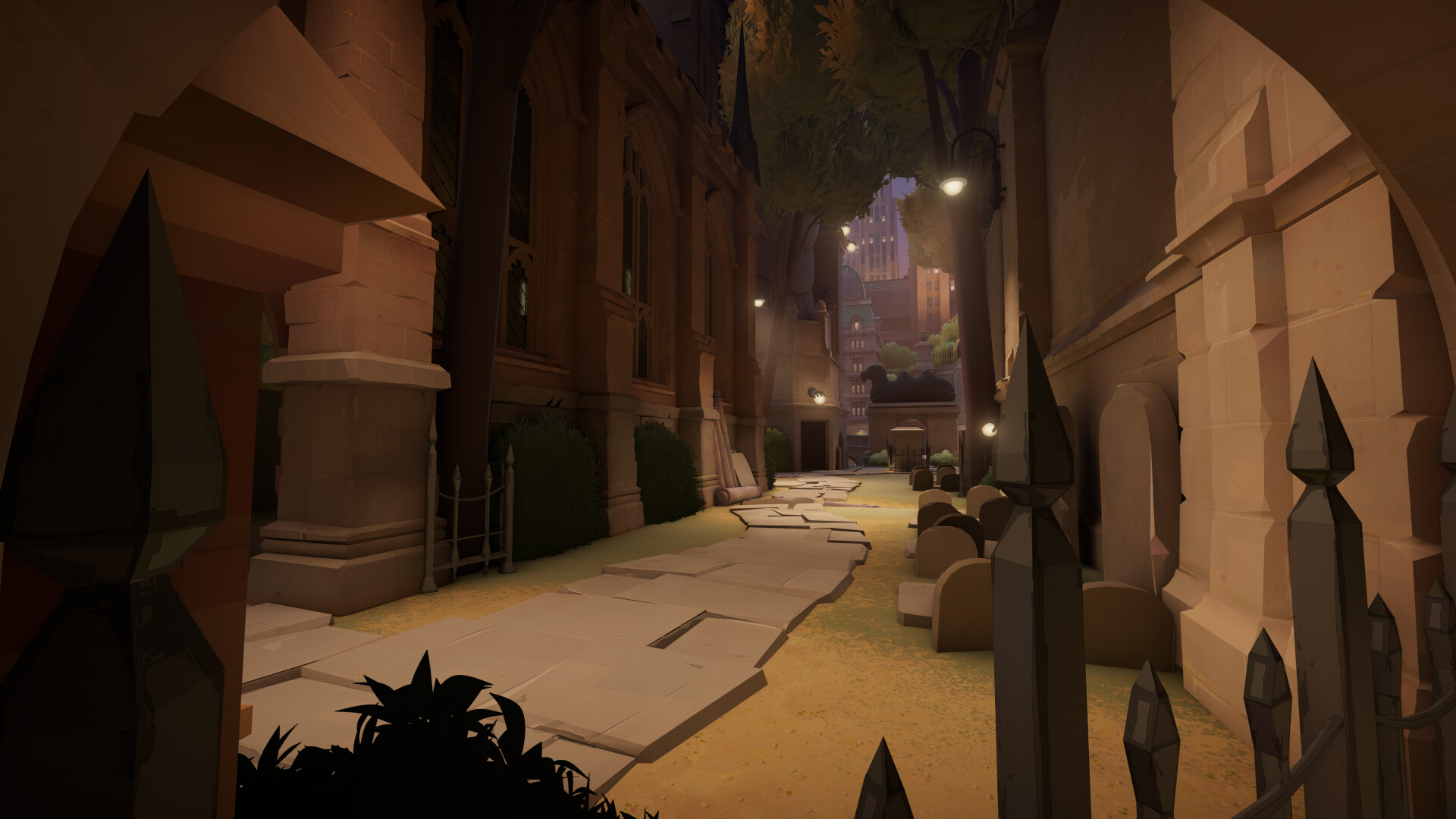
Once lanes stabilize, the map itself becomes your farm. The “City Never Sleeps” update reworked the neutrals into a new family of creatures called Haunts, and — usefully for farmers — the HUD now shows each Haunt’s soul value and comparative difficulty, so you can judge whether a camp is worth your time at a glance.
The City Never Sleeps update also added and refreshed several high-value objectives worth routing toward:
- Bell Tower (Chinatown) — a highly concentrated soul hotspot at the top of the tower. The catch: the bell rings loudly across the map while you collect, so expect company.
- Sunken Plaza — hidden beneath the Plaza district’s main square. It is explicitly high-risk, high-reward, and the outside world fades away as you descend.
- Tough Crates — sealed crates that require a Heavy Melee to break open, but the extra souls make the detour worthwhile.
- Buff Containers — revamped golden statues that now grant permanent bonuses including Spirit Resist, Bullet Resist, Ability Range, and Move Speed. These are permanent, so grabbing them early pays dividends all game.
- Healing Snacks — hidden pickups around the map that let a sharp-eyed player heal in a pinch instead of recalling.
- Steam Vents — standing on one grants invisibility and a small amount of regen, ideal for farming contested areas or escaping a gank with your haul intact.
Haunt Camps and Where They Live
Community notes map the new Haunts to specific districts, which helps you plan a farm route:
- Uptown is described as the quickest route toward where the action is.
- Theater is home to the Stage Hands haunt.
- Chinatown hosts the Crabbage Pots and Festival Spirit haunts, plus the Bell Tower objective.
- Haunted Lot is home to the Shrooms haunt.
- Plaza hosts the Underhands haunt and the Sunken Plaza objective.
Because the map’s districts each have their own flavour of Haunt, learning a rotation that sweeps a few camps between waves is one of the most reliable Deadlock farming tips for climbing your net worth.
Objectives Beyond Farm
Farming creeps is steady income, but the big swings come from map objectives. Guides consistently list the objective chain as Guardians, Walkers, Shrines, the Patron, and the Mid-Boss/Rejuvenator, with Guardians being the per-lane start of that progression.
Treating these objectives as “farming” is a useful mental shift: dropping a Guardian or a Walker converts your lane pressure into map space and team-wide souls, while the Mid-Boss/Rejuvenator is a major swing that can reset the pace of an entire match. If your team is ahead on souls, pushing objectives is how you convert a farming lead into a win.
Itemizing for Better Farming
The right items directly increase your farming output. Community build resources organise items into Weapon / Vitality / Spirit categories across four cost tiers, and a handful of early-tier items are frequently recommended for players who want to farm faster and lane harder:
- Monster Rounds — increases damage to, and bullet resistance from, non-heroes, plus out-of-combat regeneration. A natural pick for jungling and camp clearing.
- Active Reload — rewards a well-timed reload press with bonus fire rate, bullet lifesteal, and move speed, smoothing out your farming rhythm.
- High-Velocity Rounds — increases bullet velocity and weapon damage, helping you land last hits at range.
- Rapid Shooting and Quick Shooter — raise fire rate, which speeds up both wave clearing and single-target last-hitting.
- Extended Magazine — more ammo and weapon damage means fewer interruptions while you farm.
- Headshot Booster and Close Range — situational damage tools that shine when fighting for lane control.
- Life-Giving Shot — heals on your next shot (50 versus heroes, 20 versus souls and non-heroes), a subtle but real sustain advantage while you farm.
The Broker is a wildcard worth knowing about. This wandering merchant sells demon-touched (Corrupted) items and modifications, appears in different spots, and only sticks around for a few days. He trades your high-tier items for Corrupted versions — for example, Corrupted Ricochet or Corrupted Recharge — and each match those Corrupted items roll random negative attributes from a predefined set. It is a gamble, but for an experienced farmer with spare souls it can be a powerful deal.
Quick Farming Tips to Apply Right Now
- Prioritise orb collection consistency over flashy plays — the compounding income matters more than a single kill.
- Check the HUD soul values on Haunts before committing to a camp; skip the ones that are too taxing for the payoff.
- Route through Bell Tower, Sunken Plaza, and Tough Crates when you have space, since these are the map’s most soul-dense spots.
- Snag Buff Containers whenever they are free — their bonuses are permanent.
- Grab Healing Snacks and dip into Steam Vents to stay on the map and keep farming instead of recalling.
- Keep an eye on Golden statues and crates as part of your rotation rather than a one-time novelty.
One Mode Where Farming Doesn’t Exist
It is worth knowing that not every Deadlock queue rewards the farming grind. Street Brawl is a fast-paced 4v4 mode played as a best-of-five, with rounds that last only a couple of minutes. Crucially, players start each round with equal resources, which the update notes describe as “no farming.” If you want to practise pure mechanics or take a break from the souls race, Street Brawl strips the economy out entirely — a handy contrast that highlights just how central farming is to the standard mode.
Backed by Community Data
Everything in this Deadlock farming guide 2026 reflects community-reported behaviour and the design direction shown in recent updates rather than a locked-in official rulebook. Numbers attached to items, Haunts, and objectives can shift with patches — and with new heroes dropping two per week in recent release cycles, item and meta advice ages quickly. Use this guide as your framework, then verify the current numbers in-client as you play.
