What Actually Wins Games: Core Deadlock Tips
Most Deadlock tips floating around focus on flashy plays, but the players who climb consistently win on fundamentals: souls economy, item timing, and map awareness. This collection of Deadlock tips and tricks pulls together community-reported advice and the officially showcased systems from Valve’s early-development build, so you can turn small habits into a real advantage.
One important note up front: Deadlock is still in early development, and a lot of the specifics below come from community-reported data rather than confirmed official documentation. Treat exact numbers and item behavior as a snapshot — if something looks different in your client, trust what you see live.
Deadlock Tips for Beginners: Win the Souls Economy
If you only take one thing from any beginner guide, make it this: souls are the currency that buys items, and items decide fights. Community guides consistently describe the economy as the single biggest skill gap for new players.
Last-Hitting, Soul Orbs, and Denies
Killing creeps is not the goal — securing the orb is. Community sources describe the economy as built around last-hitting, soul orbs, and denies, meaning you can lose income if an enemy denies your orb. Practice timing your shots so you confirm every orb in your lane, and pressure enemy orbs whenever possible. Trading a little poke damage for a denied orb is often the better play early.
Ziplines Beat Walking
Community walkthroughs highlight ziplines as the fast travel backbone that connects the three/four-lane map. Instead of trudging back to lane on foot after a death or a shop trip, learn the zipline routes so you return to the fight with your items online and your health topped up.
Pick a Forgiving Hero First
For beginners, community beginner guides repeatedly point to a short list of approachable heroes: Abrams, Haze, Seven, Infernus, McGinnis, and Dynamo. These kits let you contribute to fights without needing perfect mechanical execution, making them ideal while you learn the flow of laning and teamfighting.
Deadlock Guide Tips: Buy the Right Item at the Right Time
Items are organized into Weapon, Vitality, and Spirit categories across four cost tiers, and community build resources describe phase-based routes — the idea that you buy to match the phase of the game, not just the showdown.
Early Power Spikes (Tier I and Tier II)
Community-reported Tier I staples worth knowing include:
- High-Velocity Rounds — +60% bullet velocity and +8% weapon damage.
- Extended Magazine — +30% max ammo and +8% weapon damage.
- Rapid Shooting — +9% fire rate.
- Monster Rounds — more damage to, and bullet resistance from, non-heroes, plus out-of-combat regeneration.
- Headshot Booster — bonus health plus extra weapon damage on your next headshot against an enemy hero.
- Life-Giving Shot — your next shot heals for 50 against heroes and 20 against souls and non-heroes.
At Tier II, Quick Shooter adds +20% fire rate, while Active Reload rewards a correctly timed reload press with bonus fire rate, bullet lifesteal, and move speed — a cheap habit that pays off all game.
Don’t Forget Healing Rite in Lane
Community laning advice calls out Healing Rite as the go-to sustain purchase. A single sustain item lets you stay in lane through harass and keeps your soul income steady instead of forcing an early trip back.
Save for Your Late Spikes
Expensive high-tier purchases like Inhibitor and Pristine Emblem are worth the wait, but only if you don’t die before you can afford them. Play safer as your gold climbs toward a big item, and let your power spike arrive.
Counter-Picking with Items: The Real Deadlock Tips and Tricks
Counter-items win more fights than raw damage. Community counter tables map specific heroes to the purchases that blunt their strengths — this is one of the highest-value Deadlock tips for beginners because it turns a “who do I build against” guess into a checklist.
| Enemy Hero | What Threatens You | Community-Reported Counters |
|---|---|---|
| Abrams | Stuns and self-healing | Anti-heal, barrier, and slow items |
| Bebop | Hook, uppercut, and bombs | Barrier, debuff-removal, and rescue items |
| Dynamo | Crowd-control abilities and ultimate | Barrier, control, and rescue items |
| Grey Talon | Traps and airborne play | Debuff reduction, Knockdown, and shift items |
| Haze | Primary fire and ultimate | Return Fire, Knockdown, and defensive items |
| Infernus | Passive damage and healing | Debuff reduction, anti-heal, and slowing items |
| Ivy | Abilities and healing | Mobility, anti-heal, and silence items |
| Kelvin | Slowing and healing | Mobility, anti-heal, and silence items |
| Lady Geist | Sustain and burst | Armor, anti-heal, and silence/Curse items |
| Lash | Movement abilities | Silence, slow, and Knockdown items |
| McGinnis | Turrets and slowness | Monster Rounds, mobility, and damage-reduction items |
| Mirage | Tornado | Reactive Barrier |
The Utility Items That Decide Fights
Community guides single out a handful of items as universal trouble-shooters:
- Anti-heal: Decay, Healbane, and Toxic Bullets to counter healing-heavy heroes.
- Defense: Reactive Barrier (counters stuns/abilities), Ethereal Shift (escape and wait out ultimates), Unstoppable (beat crowd control), Debuff Remover, Debuff Reducer, Metal Skin, and Return Fire.
- Disables: Knockdown and Silence Glyph to stop enemy ultimates, Curse and Slowing Hex to lock down slippery targets.
- Support: Rescue Beam to pull allies out of enemy abilities.
- Mobility: Warp Stone, Extra Stamina, Majestic Leap, Veil Walker, and Sprint Boots to escape and reposition.
Map Tips: Objectives, Hidden Souls, and Landmarks
Community showcases describe objectives that reward map control — Guardians, Walkers, Shrines, the Patron, and the Mid-Boss/Rejuvenator. The Guardian is the big objective with the torch sitting in each lane, so pushing a lane often means cracking that first.
Free Value Hiding Around the Map
- Bell Tower — ascend the Chinatown landmark for a highly concentrated soul hotspot. The catch: the bell rings loudly across the map while you collect, advertising your position.
- Sunken Plaza — tucked beneath the district’s main square, a high-risk, high-reward descent where outside sounds fade away. Reward scales with the danger.
- Tough Crates — break these open with a Heavy Melee for extra souls.
- Healing Snacks — hidden snacks scattered around the map let a keen-eyed player heal up in a pinch.
- Buff Containers — revamped golden statues now also grant permanent Spirit Resist, Bullet Resist, Ability Range, and Move Speed.
- Steam Vents — stand on them for invisibility and a small amount of regen, perfect for ducking in and out of veiled cover with your team.
Learn the Districts
Community map notes break the city into districts with distinct identities — Uptown as the quickest route to the action, Times Square as the beating heart, Downtown as the busiest stop, plus Theater, Chinatown, the Haunted Lot, the Plaza, Umbria University, Central Park, the Brownstones, the Stock Exchange, Seaport Dock, and Old Fairfax Factories. Knowing which lane landmark sits where makes rotations far faster.
The Broker and Corrupted Items: Gamble Wisely
Community coverage of the Broker describes him as a mysterious wandering merchant who sells demon-touched (Corrupted) items and modifications. He appears in different spots, stays only a few days, and is only around for a limited time.
His trade is simple and risky: he exchanges your high-tier items for Corrupted versions (examples cited include Corrupted Ricochet and Corrupted Recharge). Each match, corrupted items get random negative attributes drawn from a predefined set — so the trade is a genuine gamble. Check where he’s stationed before committing a core item, and don’t hand over something your build depends on unless you can afford the downside.
Haunts: Read the New Neutrals
Community notes say the old neutrals have been replaced by a variety of creatures called Haunts with new behaviors, and their soul value plus comparative difficulty is now shown in the HUD. That HUD readout is a free tip: use it to decide instantly whether a camp is worth clearing or a death trap.
The Haunts documented by the community span the whole city — Specimens, Gutter Ghouls, Barrel Mimics, Past Dues, Stage Hands, Crabbage Pots, Festival Spirit, Shrooms, and Underhands — each tied to a district such as the Theater, Chinatown, the Haunted Lot, or the Plaza. Learning which haunt lives where helps you farm safely and avoid nasty surprises.
Hero Release Voting and Priority Tokens
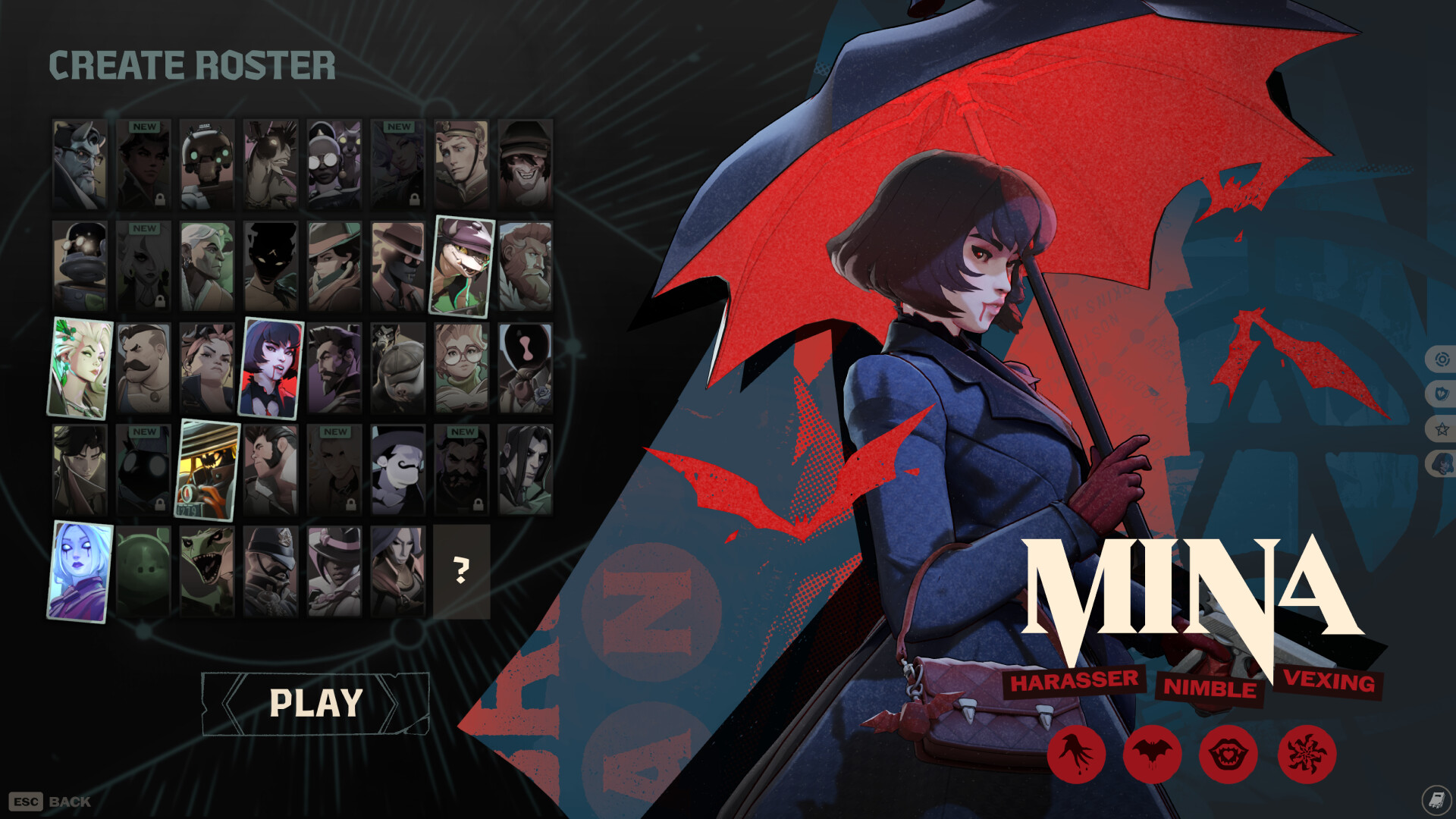
According to official update notes, new heroes release two per week, and the community votes on the release order. You cast votes in the new Pregame lobby — where the winning team’s votes count double — and at the Hideout ballot box. The First Win of the Day grants bonus votes, so even a short session still moves the needle. New Hero Priority Tokens let players more reliably lock in the newly released hero, which is a great reason to bank votes early.
If you’re chasing a specific hero, vote often and play for that first win — it’s one of the most reliable “free” contributions you can make outside of a match.
Accessibility Tips Worth Turning On
Community and official showcases highlight dedicated accessibility settings for visuals, audio, and controls. Useful toggles include enemy UI color for readability, VO subtitles with customization, auto move, auto fire, and auto mantle, reduced camera shake, and reticle updates. Don’t ignore these — a cleaner reticle and reduced screen shake can genuinely sharpen your aim in chaotic teamfights.
Deadlock Tips Reddit Keeps Repeating
Community discussion threads and shared guides surface a few recurring pieces of wisdom worth stealing:
- Mechanics over memes. The famous “how to quit Deadlock” joke guide (uninstall, then go outside and touch grass) is community humor, not strategy — but it’s a reminder that tilt is real. Step away when you’re on a loss streak.
- Practice in the sandbox. A community-mentioned cheat,
dl_streets, loads an empty practice map with useful cheats enabled so you can test movement, item interactions, and hero combos without the pressure of a live match. - Legendary item testing. Community notes reference an “Old Gods, New Blood” set of legendary items — many grantable via
giveitemcommands such as Runed Gauntlets, Infinite Rounds, Eldritch Shot, Shadow Strike, Unstable Concoction, Eternal Gift, Shrink Ray, Mystical Piano, Omnicharge Pendant, Prism Blast, Nullification Aura, Cloak of Opportunity, Electric Slippers, Celestial Guidance, Icarus Wings, Patron’s Blessing, and Frostbite. Some entries (for example Apex Combat, Ancient Shielding, Shadow Step, Timeless Emblem, Haunting Scream, and Aerial Mastery) are reported as not currently in game, so treat those as development curiosities rather than live strategy. - Play what you love. Community sources cite favorites like Vindicta and Graves, and note that some players main a single hero like Shiv. Comfort on your hero usually beats chasing whatever is “meta.”
The Fast Mode: Tips for Street Brawl
Community showcases describe Street Brawl as a fast-paced mode: a quick 4v4 battle over the city in a best-of-five match, with each round lasting only a couple of minutes. Because players start each round with equal resources and no farming, the mode strips out the souls economy entirely. That means item timing, not last-hitting, decides rounds — so build for tempo and fight early. It’s also a low-stakes way for beginners to practice teamfighting and item counters without the long macro game.
Final Thoughts
The best Deadlock guide tips all point the same direction: secure your souls, buy to counter the enemy, respect the map, and stay calm. Because Deadlock is still in early development and many community-reported numbers shift between patches, keep testing in the sandbox and adapt — the players who treat each match as a puzzle to solve, rather than a fight to brute-force, are the ones who climb.